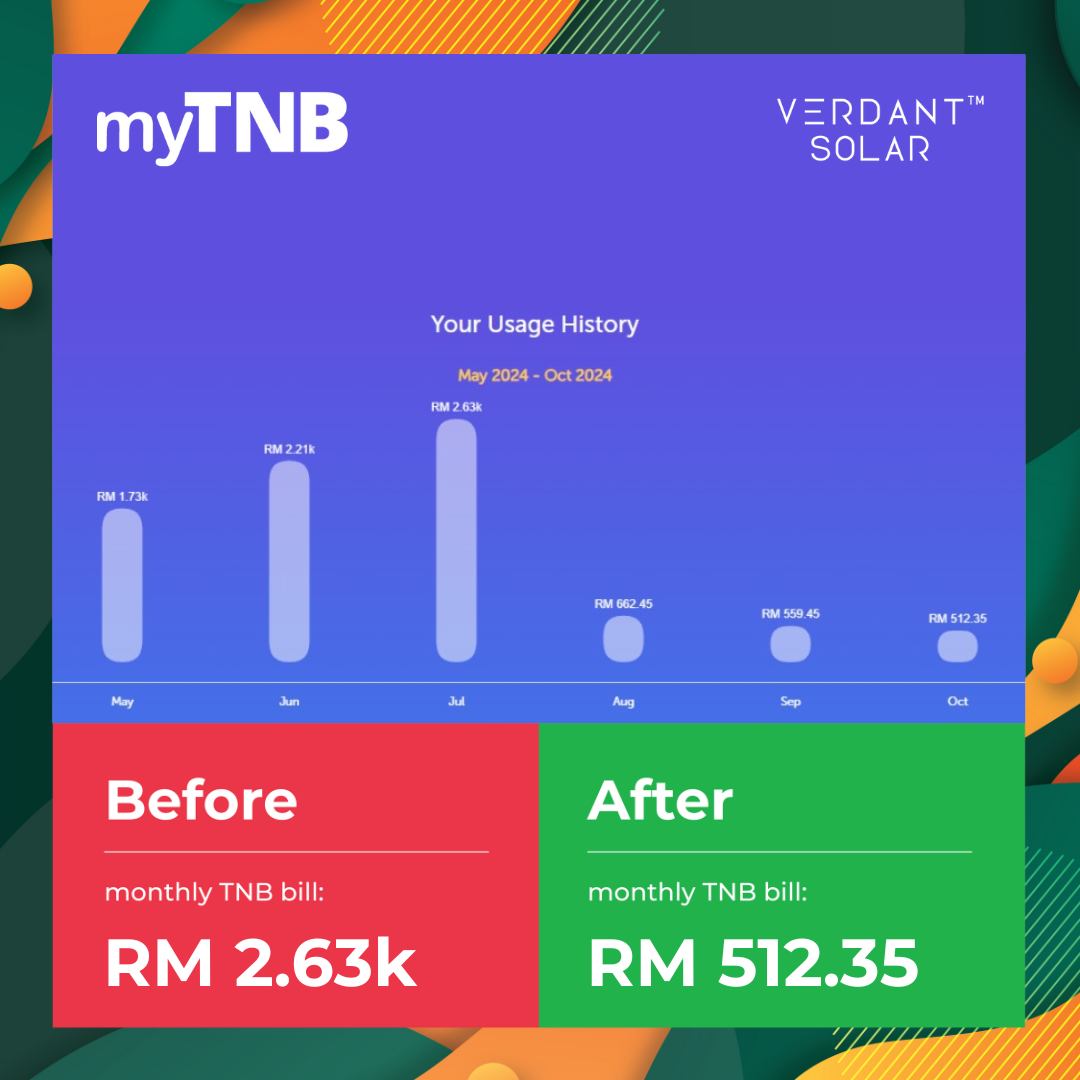
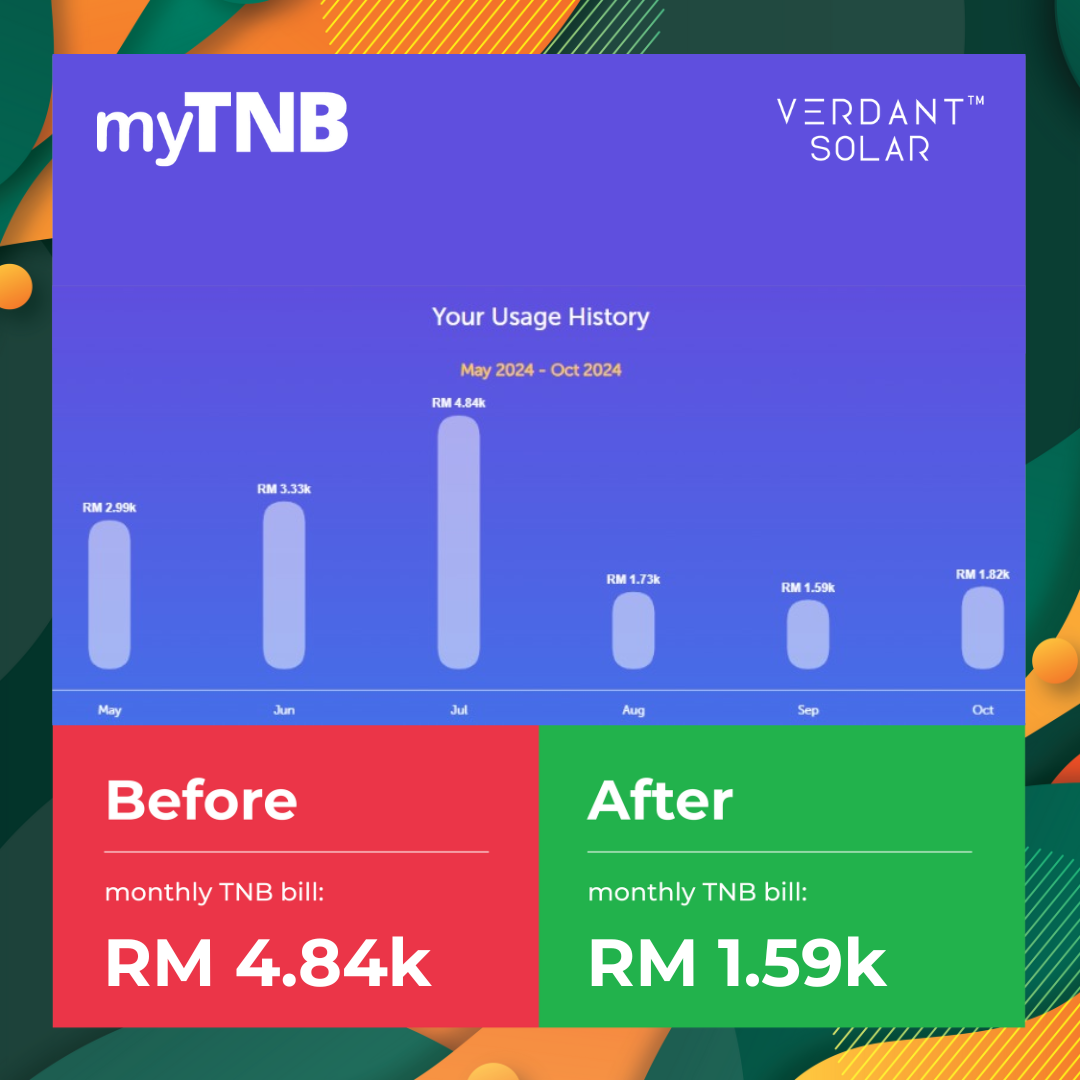
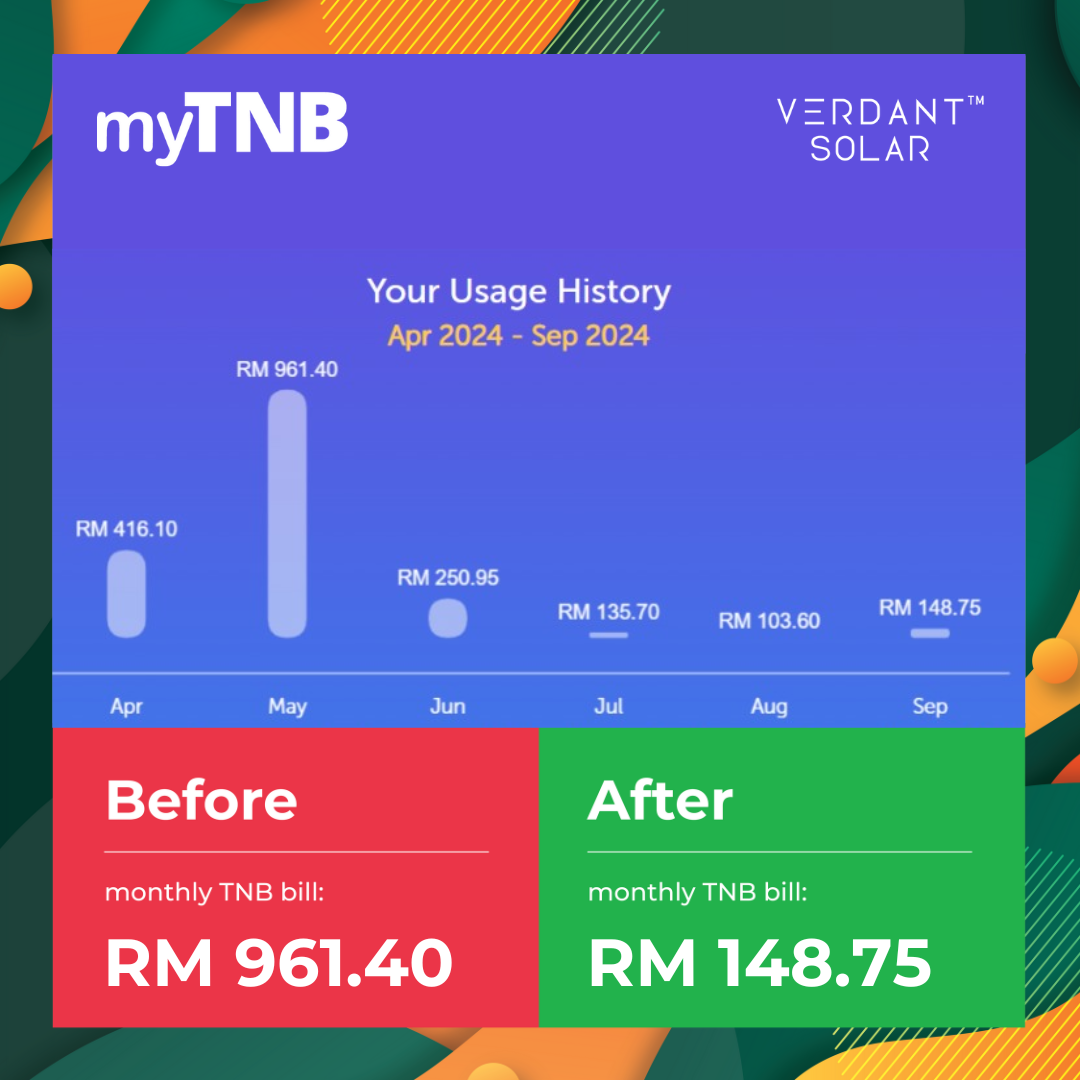
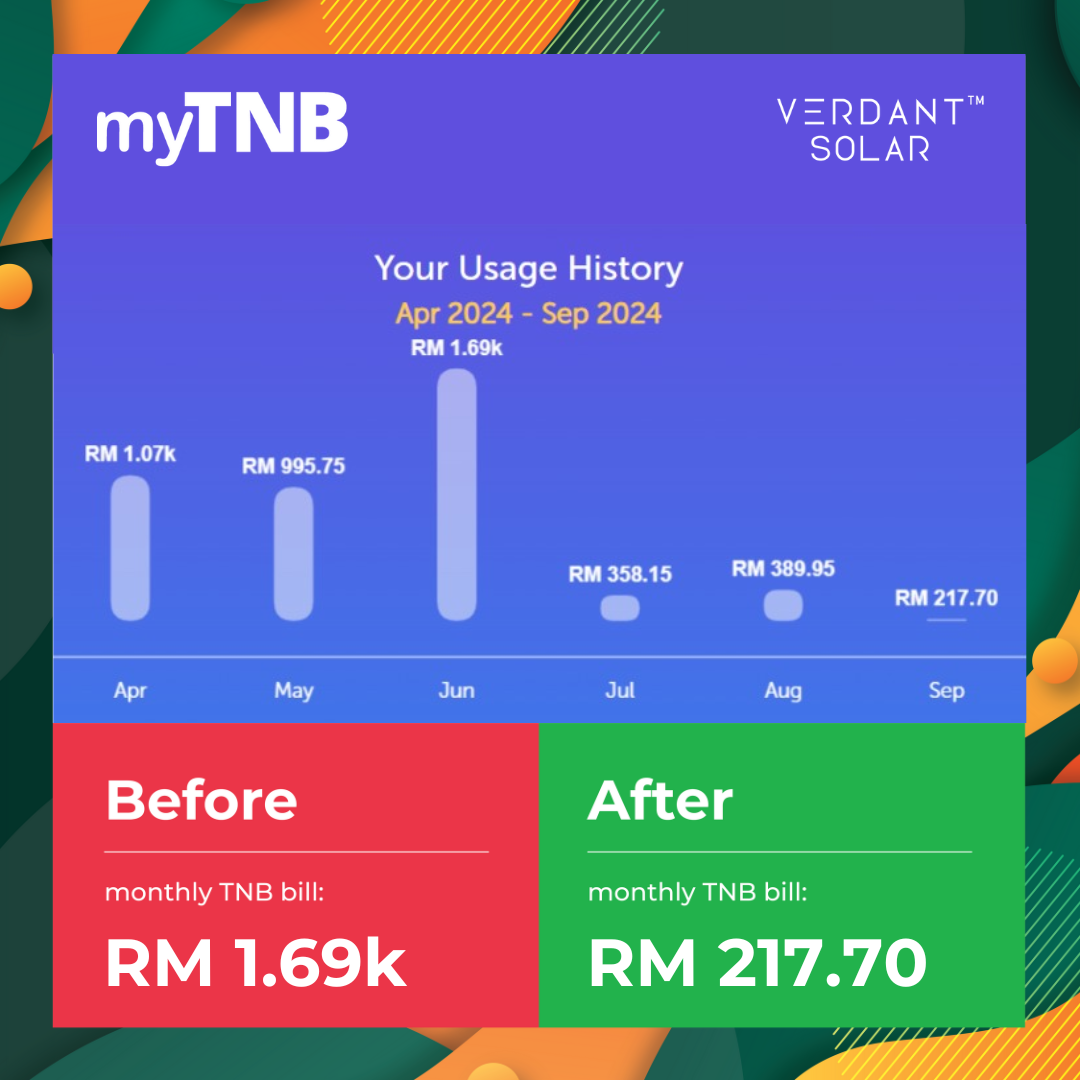
Switch to solar with Verdant Solar and cut your electricity costs up to 50%, especially for factories with high usage. Over time, this brings substantial long-term savings.
Install solar and enjoy tax allowance, reducing upfront investment and potentially securing green energy certifications, boosting market competitiveness.
Show your commitment to sustainability by going solar. This improves your brand image and attracts eco-conscious customers and partners, strengthening your market influence.
Get a free site visit and consultation to analyze your electricity usage, uncover potential savings, and receive a tailored proposal with estimated ROI and benefits.
The energy generated by NOVA consumers will be consumed first, which implies that less energy will be imported from the utility.
Under this programme, any excess energy generated will be exported to the utility grid and credited based on the average SMP. The priority is self-consumption; however, some premises that are not operating during the weekends or public holidays may have excess energy exported to the grid. The credit amount in the month can be used to offset bill payments for the next Billing Period.
NOVA allows any excess Energy produced in a month which is not consumed by the NOVA Consumer to be exported up to three (3) Designated Premise via the Supply System. It will enhance cost efficiency while maximizing the use of Energy produced by the solar PV Installation.
The quota allocation is 1100MW. As of now (July 2024), the quota balance is 186MW. The quota ends on December 31, 2024.
The duration of the payback period averages 3 years with the outright payment method.
Demand is the rate of energy used and is measured in kilowatts (kW). This is different to energy which is measured in kilowatts-hour (kWh).
Demand is calculated in fixed half-hour (30 minutes) periods. The periods are calculated in 30 minute intervals starting from 0800 until 2200 hours. The first period would be from 0800 to 0830 hours, the second would be from 0830 to 0900 hours, so on and so forth.
TNB calculates the demand according to the energy consumed during that half-hour period.
Example: If 2000kWh of energy is consumed during the first period (0800 to 0830), the demand would be 2000kWh / 0.5 hr = 4000kW
The Maximum Demand would then be the highest recorded demand for all the half hour periods during the month.
The consumer is then billed based on the recorded Maximum Demand.